For many grappling with chronic pain, the experience can feel like a relentless cycle. Injuries that never quite heal, persistent stiffness, and recurring discomfort often lead to a search for effective, non-invasive solutions. Traditional approaches sometimes offer temporary relief, but the underlying issues—like poor circulation, unhealed tissue, or stubborn scar tissue—can cause the pain to resurface, leaving individuals feeling stuck in a loop of discomfort and limited mobility.
This is where advanced therapies like shockwave therapy come into play, offering a different pathway to healing. This non-invasive treatment uses acoustic waves to stimulate the body’s natural repair mechanisms. By delivering targeted pulses, it can help boost blood flow, break down scar tissue, and encourage cellular regeneration in affected areas. For those in the United States seeking relief from chronic musculoskeletal conditions, understanding how this innovative approach works can be a crucial step toward recovery. You can explore local options for Shockwave therapy to see if it’s available near you.
The goal of shockwave therapy is to address the root causes of persistent pain, rather than just masking symptoms. It works by sending signals to the body to repair damaged areas naturally, offering an alternative to injections or surgery. This method is particularly appealing to individuals who want to recover without relying on drugs, or those who wish to maintain an active lifestyle without constant setbacks. For those seeking this natural healing path, True Health Chiropractic and Acupuncture focuses on stimulating the healing process at the source of the problem.
What Shockwave Therapy Does for Your Body
Shockwave therapy, also known as Extracorporeal Shockwave Therapy (ESWT), utilizes high-energy acoustic waves to interact with tissues in the body. These waves are not electric shocks but rather sound waves that carry energy and can be focused on specific areas of chronic pain or injury. The primary mechanisms through which shockwave therapy promotes healing include:
- Stimulating Blood Flow: The acoustic waves encourage the formation of new blood vessels and improve circulation in the treated area. Enhanced blood flow delivers essential nutrients and oxygen, which are vital for tissue repair and regeneration.
- Breaking Down Scar Tissue: Chronic injuries often lead to the formation of dense scar tissue, which can restrict movement and contribute to pain. Shockwaves can help to break down this fibrotic tissue, allowing for greater flexibility and reduced discomfort.
- Promoting Cellular Regeneration: The mechanical stress induced by shockwaves can stimulate cells responsible for tissue repair, such as fibroblasts and osteoblasts. This activation can accelerate the healing process of tendons, ligaments, and bones.
- Reducing Calcium Buildup: In some degenerative tendinopathies, calcium deposits can form within tendons, leading to pain and dysfunction. Focused shockwaves have the ability to break up these calcifications, alleviating symptoms.
- Modulating Pain: While the exact mechanism is still being researched, shockwave therapy is believed to influence nerve activity, leading to a reduction in pain perception. It can also release certain biochemicals that have analgesic effects.
These combined effects make shockwave therapy a promising option for a range of musculoskeletal conditions that have not responded to conventional treatments.
Conditions That Benefit from Shockwave Therapy
Shockwave therapy is increasingly recognized for its effectiveness in treating various chronic tendon, bone, and joint conditions. Its non-invasive nature and ability to stimulate natural healing make it suitable for:
- Plantar Fasciitis: A common cause of heel pain, often characterized by inflammation of the thick band of tissue running across the bottom of your foot.
- Achilles Tendinopathy: Pain and stiffness in the Achilles tendon, often due to overuse.
- Rotator Cuff Tendinopathy: Shoulder pain resulting from inflammation or degeneration of the tendons surrounding the shoulder joint.
- Tennis Elbow (Lateral Epicondylitis) and Golfer’s Elbow (Medial Epicondylitis): Pain on the outside or inside of the elbow, respectively, caused by overuse of forearm muscles and tendons.
- Patellar Tendinopathy (Jumper’s Knee): Pain below the kneecap, common in athletes involving jumping activities.
- Shin Splints (Medial Tibial Stress Syndrome): Pain along the inner edge of the shinbone, often seen in runners.
- Chronic Back and Neck Pain: Musculoskeletal pain that persists for an extended period, often related to soft tissue issues.
- Non-Healing Bone Fractures: In some cases, shockwave therapy can stimulate bone healing in fractures that are slow to mend.
It’s important to note that while shockwave therapy is effective for many, it is typically considered when other conservative treatments have not yielded satisfactory results.
The Shockwave Therapy Experience: What to Expect
Undergoing shockwave therapy is a relatively straightforward process, usually managed by a sports medicine physician or a practitioner with appropriate supervision. Here’s a general overview of what patients can expect:
Before the Treatment
Before initiating shockwave therapy, a thorough assessment is crucial. This often involves:
- Diagnosis: Your provider will evaluate your injury, movement patterns, and medical history to confirm that shockwave therapy is an appropriate treatment. Imaging like an ultrasound may be used to pinpoint the exact area requiring treatment.
- Discussion of Expectations: You’ll learn about the treatment plan, including the number of sessions typically required and what constitutes real progress.
- Benefit Check: While shockwave therapy is FDA-approved for safety and effectiveness and is FSA/HSA eligible, it is generally not covered by major medical insurance. It’s advisable to check your benefits before your first visit to understand any out-of-pocket costs. Many patients opt for this therapy due to its efficacy when other treatments fail, often finding the cost less than injections or surgery.
During the Treatment Session
A typical shockwave therapy session is quick and non-invasive:
- Positioning: You will be positioned comfortably, either lying down, sitting, or on your side, to allow the practitioner clear access to the affected area.
- Application: A gel, similar to what is used during an ultrasound, will be applied to your skin over the treatment area.
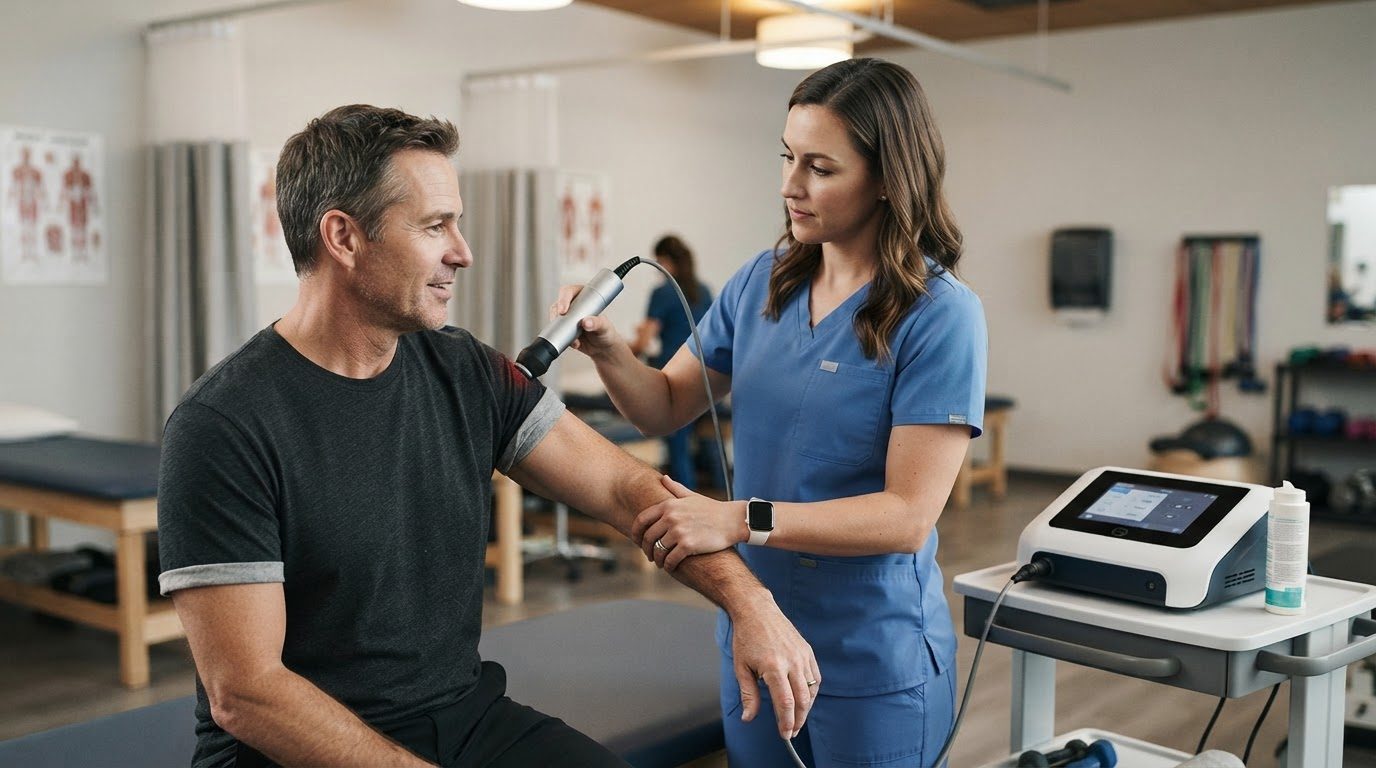
- Delivery of Waves: A handheld probe connected to a machine will deliver pulses of sonic waves. The practitioner controls the frequency and energy of these waves. You will hear a clicking sound with each application, often described as a rubber band snap or a mallet tap.
- Sensation: Most patients describe the sensation as an intense pressure or tapping. While it may be uncomfortable, especially since it targets an already injured area, it is generally well-tolerated. The practitioner will adjust the energy level to a point you can manage. Local anesthesia is typically not used.
- Duration: A single treatment session usually lasts between 15 to 20 minutes.
After the Treatment
The period following a shockwave session is generally characterized by minimal downtime:
- Immediate Aftermath: The discomfort typically subsides as soon as the treatment is over.
- Potential Side Effects: Some minor side effects may occur, including temporary redness, swelling, bruising, or numbness in the treated area. These are usually mild and resolve quickly.
- Return to Activity: One of the significant benefits of shockwave therapy is the quick return to activity. Athletes, for instance, can often resume their activities within 24 hours.
- Pain Management: You may experience an initial decrease in pain, which might return within one to two weeks. Over-the-counter pain relievers like acetaminophen can help manage any discomfort between sessions.
- Results: The full benefits of shockwave therapy may not be immediately apparent and often increase over time. Most patients see meaningful improvement within three to six sessions, depending on the condition and its chronicity.
Who Is a Candidate for Shockwave Therapy?
Shockwave therapy is a suitable option for active individuals experiencing chronic pain or injury, whether acute or long-standing, that hasn’t responded to more conservative treatments. It’s often chosen by those seeking a natural way to heal without drugs, injections, or surgery, and who wish to maintain their training, travel, and work schedules without significant interruption.
However, certain conditions may preclude an individual from receiving shockwave therapy. It is generally not recommended for:
- Pregnant individuals.
- Individuals with certain bone tumors or metabolic bone conditions.
- Those with acute inflammation or infection in the treatment area.
- Patients with blood clotting disorders or those taking blood thinners, due to the potential for bruising or hematomas.
- Individuals with significantly low bone density (osteoporosis), as there’s a rare risk of stress fracture.
- Areas over major blood vessels or nerves.
- Children with open growth plates.
A thorough consultation with a healthcare professional is essential to determine if shockwave therapy is the right course of action for your specific condition and health profile. They can assess the risks and benefits and integrate the therapy into a comprehensive treatment plan, often alongside other modalities like physical therapy or platelet-rich plasma (PRP) injections.